
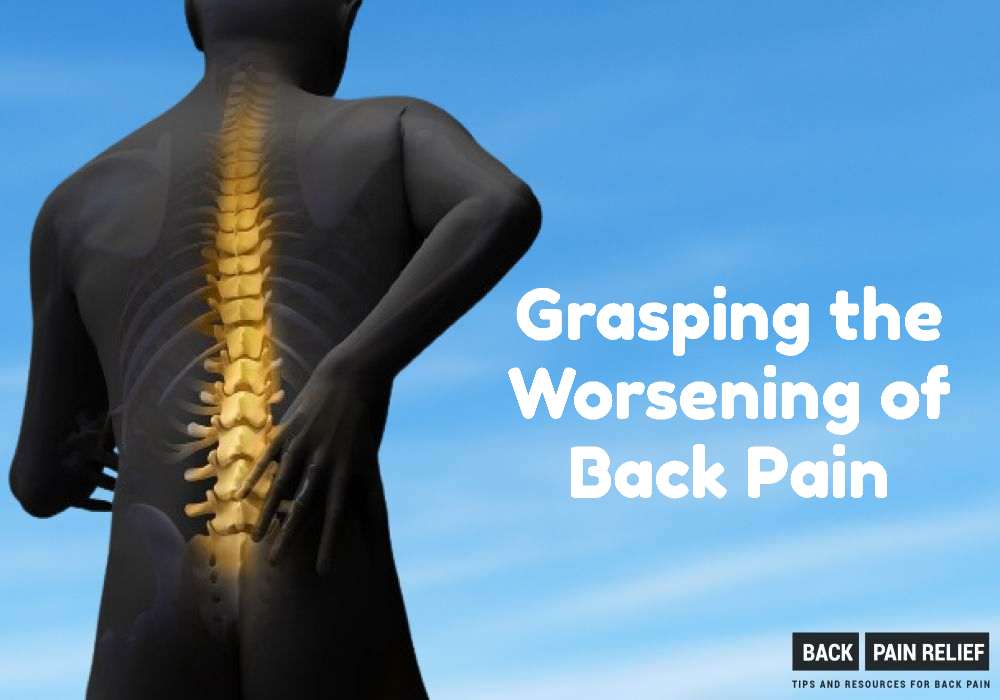
Back pain is more than a fleeting annoyance; it’s an all-too-familiar condition that we’re fighting daily. Waking up in the morning, there’s hope for what the day will bring, but to most of us, there lies a nagging question: “Is my back pain worse?” This increasing pain can transform an active lifestyle into one of restriction, impacting everything from mundane chores to overall health.
We typically downplay the seriousness of back pain – it may be written off as a simple after-effect of aging or a sign of immobility. But that harmless spasm can be attempting to inform us that something else is humming along in the background. Interestingly, statistics would lead one to believe that nearly 80% of all adults have been impacted in one way or another by back pain at some time in life (Martin et al., 2014). Aside from that, back pain would even go on to become other severe conditions such as anxiety and depression and thus impact physical as well as mental health in a multidimensional way.
So why is this mind-blowing figure of back pain occurring? In most cases, it is a mix of poor posture, a lack of exercise, and stressors of our active lifestyle. Research indicates that by neglecting the wellness of our spine through inactivity, our muscles degenerate in strength, causing more misery and more pain. As soon as pain in the back begins to develop, the reflex is to curtail movement, which can actually worsen the situation (Alzahrani et al., 2022). It’s a catch we must navigate very carefully not to fall prey to.
Practical Steps to Success Over Pain
When you reach the point at which you realize your back pain is becoming more crippling, locating that first step toward improvement can seem overwhelming. But there are small, no-nonsense steps you can take as a stepping stone to a stronger back. Start by incorporating regular exercise into your life. You don’t have to make every activity into an Olympic contest; even a daily walk can be beneficial. Gentle exercises that strengthen and low-impact activities such as swimming or yoga can relax tight muscles and increase flexibility if done on a regular basis.
Don’t forget your workspace either. Comfort and ergonomics must be king. At home or in the business environment while working, make sure your chair is cushioning your lower back well and position your computer monitor at eye level. The adjustments don’t necessarily have to be significant but can be monumental in terms of helping to reduce stress on the spine. And, further, becoming aware of body mechanics – lifting with your legs, not your back – can go a long way toward reducing the chances of making your problem worse.
Adding heat and cold treatment provides a secondary relief measure. A 20-minute heat pad will relax tight muscles, and a cold pack can minimize swelling or inflammation. Alternating back and forth between the two is a way of supplying the body with an all-around solution to eliminate pain. Hydration is also equally important; water keeps discs in one piece and spinal health overall.
A Scientific Approach: Unlocking the Mysteries of Pain
Though common sense is helpful, entering scientific research is more informative. Neuroscience has discovered that pain is not a physical feeling; it is felt in the brain. The brain balances everything, combining emotional reactions, experience, and environmental factors, into an individual pain experience. Learning this brings about the requirement for treating not only physical discomfort, but also psychological reasons for back pain to worsen (Rath, n.d.).
Epidemiology informs us that chronic pain will establish its own neural pathway patterns in the brain, making the brain hyper-sensitive to pain messages, so even light pressure turns into an extreme experience. Cognitive Behavioral Therapy (CBT) is also found to be effective for treating chronic pain as it delves into thought patterns that exacerbate physical suffering. This evidence-based procedure conditions the brain to respond differently to pain, builds coping strategies against rising back pain.
Additionally, more recent research studies modalities like mindfulness meditation and acupuncture with promising findings in the case of chronic back pain. Mindfulness allows for increased body awareness and the fostering of pain acceptance, lowering stress, and improving mental health. Therefore, investigating holistic modalities in addition to traditional therapies may result in revolutionary relief (Lin et al., 2022).
Closing the Gap Between Knowing and Doing
Being aware of lifestyle and physical discomfort is one of the secrets to relief from back pain that is chronic. A holistic approach reveals that the issue of back pain is a complex war, one that includes physical as well as psychological combat. An understanding of movements, psychological attention, and science works into solutions that are beyond drug use or answers that are non-sustainable.
At last, in order to bid adieu to back pain once and for all, you simply need to be aware. Knowledge is power. Tuning in to the body and moving with intention and care, we start to untangle the disease web of confusion. By embracing pragmatic means and adding scientific studies to the mix, the path to recuperation becomes less daunting and more accessible. Remember, this is a process. So take the first step, inhale deeply, and have faith that with every mindful step, you’re closer to a healthier, more radiant life.
References
Alzahrani, H., Alshehri, M. A., Alzhrani, M., Alshehri, Y. S., & Al Attar, W. S. A. (2022). The association between sedentary behavior and low back pain in adults: a systematic review and meta-analysis of longitudinal studies. PeerJ, 10, e13127. https://doi.org/10.7717/peerj.13127
Lin, T.-H., Tam, K.-W., Yang, Y.-L., Liou, T.-H., Hsu, T.-H., & Rau, C.-L. (2022). Meditation-Based Therapy for Chronic Low Back Pain Management: A Systematic Review and Meta-Analysis of Randomized Controlled Trials. Pain Medicine, 23(10). https://doi.org/10.1093/pm/pnac037
Martin, B. I., Tosteson, A. N. A., Lurie, J. D., Mirza, S. K., Goodney, P. R., Dzebisashvili, N., Goodman, D. C., & Bronner, K. K. (2014, October 28). Back pain in the United States. Www.ncbi.nlm.nih.gov; The Dartmouth Institute for Health Policy and Clinical Practice. https://www.ncbi.nlm.nih.gov/books/NBK586768/
Rath, L. (n.d.). The Connection Between Pain and Your Brain. Www.arthritis.org. https://www.arthritis.org/health-wellness/healthy-living/managing-pain/understanding-pain/pain-brain-connection