
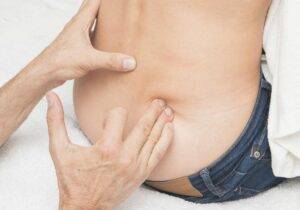
 When thinking about neck and back pain we should worry ourselves with its variations. Back pain can begin with slip disks, which in medical terms is called “Herniated nucleus pulposa.” (HNP) Medical professionals specify slip disks as ruptures of the “intervertebral disk.” The intervertebral rests in between the vertebrae (Spine) of the foundation.
The disruption has variations, consisting of the “Lumbrosacral,” (L4 and L5) in addition to cervical C5-7. The cervical is at the neck and belongs to other parts of the back and neck. When medical professionals think about slip disks they frequently browse etiology, that includes neck and back stress, injury, congenital/inborn bone malformation, heavy lifting, deteriorated disks, and/or weak point of ligaments.
After thoroughly thinking about, etiology medical professionals think about Pathophysiology, that includes protrusions of the “nucleus pulposus.” The center links to the column or spine canal and possibly compressing the spine or the nerve core, or roots, which triggers pain in the back. If the spine is compressed limiting the roots and cable frequently pain in the back, tingling, and the motor functions might stop working.
The evaluations in medical terms are based upon Lumbrosacral, which might consist of severe or persistent pain at the lower back. The pain might expand to the butts and approach the legs. The individual might feel weak point, along with pins and needles. In addition, such pain can trigger tingling around the legs and foot. The last evaluation might consist of ambulation, which emerges from pain.
The cervical is thought about. The signs specialists try to find is neck rigidness, deadness, weak point, and “tingling of the” hands. If the neck pain spreads out the pain to the arms and continue to the hands, professionals will think about slip disks. Other signs might happen, such as weak point that impacts the farthest points, or the greater borders of the body. The back curves is at the lower back area and is located in the loins or the smaller sized location of the back, which medical professionals think about likewise, particularly if the client has hard aligning this location with the curvature of the spinal column (scoliosis) and far from the location affected.
When medical professionals think about pain in the back, they will examine the diagnostics after carrying out a series of tests. Diagnostics might develop from tendon reflex, x-rays, EMG, myelograms, CSF, and/or Laséque indications. CSF assists the medical professional to evaluate the boosts in protein while EMG helps professionals in seeing the participation of the spine nerves. X-rays are utilized to assist specialists see the narrow disk area. Tendon reflexes are evaluated, which the medical professionals utilize tests to look deep into the depressed area, or the missing upper border reflexes, or in medical terminology the Achilles’ responses or reflex. Myelograms help the professional in seeing if the spine is compressed. The tests begin if the Laséque indications reveal favorable outcomes behind etiology findings, Pathophysiology, evaluations, and so on.
How physicians handle slip disks:
Medical professionals recommend management in medical plans to separate or ease pain in the back. The management plans might consist of diet plan whereas the calories are set according to the client’s metabolic needs. The physician might increase fiber consumption, in addition to force fluids.
Extra treatment or management might consist of hot pads, wetness, etc, in addition to hot compressions. Medical professionals frequently suggest pain medications too, such as those with NAID. The pain medications consist of Motrin, Naproxen, Dolobid, or Diflunisal, Indocin, ibuprofen, and so on. Extra medications might consist of muscle Relaxers, such as Flexeril and Valiums. The typical Relaxers are diazepam and cyclobenzaprine hydrochloride, which diazepam is valiums and the other Flexeril.
Orthopedic systems are likewise recommended to decrease pain in the back, that include cervical collars and back braces.