
Back Pain from Sitting at Desk: Understanding It
Ah, the modern workplace! A world of endless emails, virtual meetings, and the faint echoes of keyboard clicks. It’s often an exhilarating place overflowing with creativity and collaboration. But lurking in the shadows of this bustling digital landscape is an insidious foe-back pain from sitting at your desk. As we become more submerged in our screens, too many of us allow our postures to suffer unknowingly. Hours hunched over keyboards, crammed into office chairs, create the perfect storm for discomfort and persistent pain.
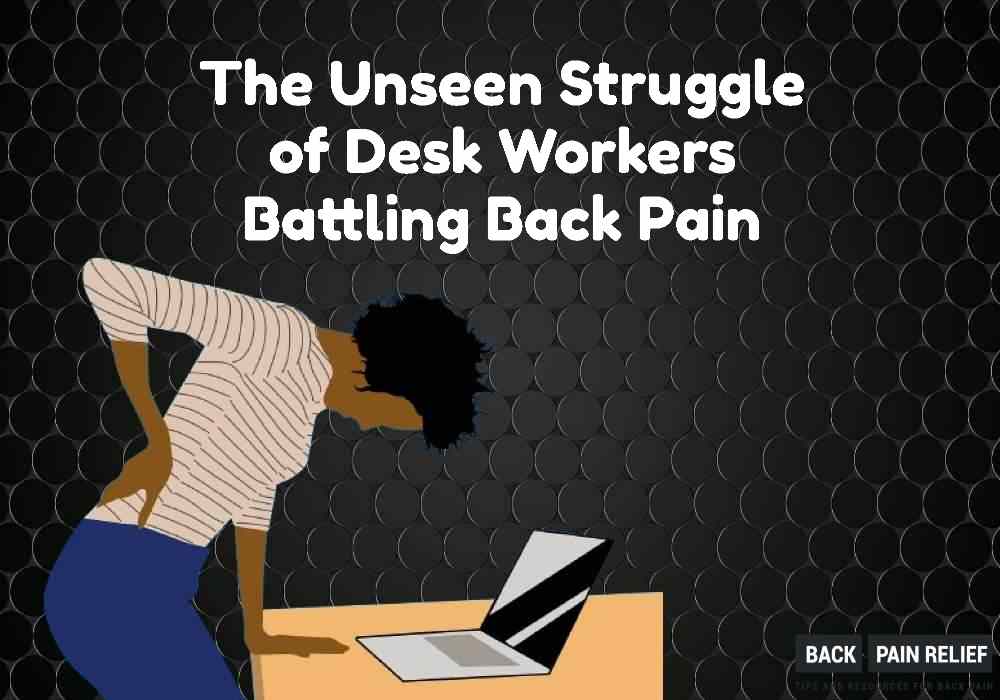
Let me paint a picture: you start your morning in that office chair, ready to conquer whatever the day’s agenda has brought on. As the hours go on, you could feel your neck craned toward the screen, your lower back slumped against the chair. And before you know it, tightness shoots through your spine as protesting muscles make their point known. This is all too familiar for millions of desk workers. Understanding the mechanics of back pain in this setting is vital if we are ever going to regain our comfort-or at least stall the pain until lunch.
It was believed that extended periods of sitting contribute to the high incidence of musculoskeletal disorders. The American Heart Association warns that years of sitting wrongly load the spine with so much stress and it can manifest into chronic pain. As we keep slouching or keeping our hips below our knees, we are offsetting the balance in our spinal alignment. This only invites back pain but also invites a host of nagging problems in the form of lost productivity and frustration due to discomfort. Hopefully, recognizing this vicious circle will be a means to break it.
Relief Science: Ways to Relieve Back Pain
Now that we have been able to wade through the world of back pain derived from sitting at the desk, let us go further and discuss some common-sense ways that can yield measurable results. First and foremost, the ergonomic workstation may well change your life. Correct lumbar support on the chair, desk at variable heights, or even setting your screen to eye level can make all the difference. In that matter, industry experts recommend you also keep your feet on the floor and knees at equal or slightly lower levels than your hip height.
Most importantly, it’s not forgetting about motion. It is so easy to get swept away by the tide of work and not remember to pull up one’s legs or even change positions. To counter this, try setting a timer that would serve as a reminder to you to stand up and stretch at least five minutes every hour. This can seem like such a trifle of a mini movement break, but research shows even minimal periods of activities greatly reduce muscle stiffness and improve circulation. Your back will surely thank you for it!
Besides these proactive measures, you might work some magic by incorporating light stretching and muscle-strengthening exercises into your daily routine for the health of your back. The focus should be on exercises targeting your core muscles because they are the spine’s internal reinforcement. Basic yoga poses, like cat-cow stretches and child’s pose, can rev up one’s spine while releasing built-up tension in a very gentle manner. This was meant to achieve a dynamic balance in such a way that muscle strength did not come into conflict with flexibility.
Whispering to Your Back: Listen to Your Body
Listening to your body is more than just some sort of hot mantra; rather, it is a survival strategy in our day-to-day battle against back pain emanating from sitting at desks. We mostly cover the symptoms when they rise to a crescendo of discomfort; being attuned to the signals may, therefore, be a path to prevention. Pay attention to that first twinge or ache. Don’t just shrug it off; act on time. Change your posture, stand up, or stretch smoothly to release stress.
It is equally important to find out what activities exacerbate your pain. For some, it could be that dreaded three-hour meeting; for others, that one chair might feel like something from the Spanish Inquisition. Keeping a diary of pain can yield very useful information about times that make you feel worse. Once you have identified patterns in your sources of pain, try going to the workplace with empathy and curiosity to create more accommodating solutions.
Also, try to inject mindfulness practices into your daily life. Deep breathing exercises can help you overcome stress, which only acts to elevate pain levels. You might find that all mindfulness or meditation helps you stay in tune with your body to take action that keeps uneasiness from building into something chronic. This more mindful approach, along with simple physical changes, makes for quite a powerful relief plan.
Conclusion: The Path to Comfort
In a nutshell, back pain generated from sitting at the desk could be thought of as an inevitable by product of contemporary working habits, but it doesn’t have to be your reality either. Learning the mechanics of back pain, investing in ergonomic solutions, committing to movement, and tuning in to the signals of your body will enable you to regain your comfort-one conscious adjustment after another.
This is not an overnight process, but with every small step, it inches you toward a work day without pain. Now, let’s rise together into stretches, into breathing, and out of the stranglehold of tension. A commitment to taking care of your body is one that leaves back pain little ground. Here’s to leaning back safely-not into desk-induced pain, but into a more balanced and healthful life of work.